Bedtime Anxiety and Fear of the Dark: A Calm, Screen-Free Plan
Fear of the dark is common. A helpful plan is not to argue a child out of the feeling, but to make the room predictable: validate the fear, talk about it during the day, keep bedtime low-stimulation, use a dim warm night light if it helps, and prefer audio over video. If fear becomes extreme or sleep is disrupted for a long time, check with a pediatrician or child mental health professional. For recurring scary dreams, imagery rehearsal is a different tool — see our nightmare guide.
What's happening — and when to seek more help
A dark room removes the visual clues that help a child know they are safe. Into that quiet, imagination can supply shadows, sounds, and "what ifs." So a child who seemed fine all day may suddenly need another hug, one more trip to the toilet, a parent in the room, or a light turned on. These are common ways bedtime anxiety shows up between ages 1 and 8.
It can help to distinguish discomfort from distress. Discomfort may make a child call out or ask for company; comfort and repetition usually help them settle. Distress is more intense — panic that does not ease with your presence, fear that intrudes across the day, persistent sleep loss, major daytime impairment, or a sudden change in behavior. If those persist, or if you feel unsure, bring it to a pediatrician or a child mental health professional. This page is parenting guidance, not medical care or a diagnosis.
Start with daytime, not 2 a.m.
The best moment to work on fear of the dark is when your child feels safe and rested — after snack, during play, or on a walk. In the dark, a child's nervous system is already asking for protection. In daylight, you can slow down, listen, and practice.
Begin by naming what you see: "It feels spooky when the room gets dark." Then resist the urge to argue. "There's nothing to be afraid of" can sound like "your feeling is wrong." A steadier message is: "It's okay to feel worried. I'm nearby, and your room is safe."
Children's Hospital Colorado suggests using imagination as a tool — for example, turning a scary corner into something playful or cozy. You might put a soft lantern by the bed, make a "brave spot," or let a stuffed animal guard the door. The goal is not to prove the dark is harmless in one night; it is to give your child a repeatable sense of agency.
Keep the daytime conversation short. A five-minute check-in is more useful than a late-night monster hunt. If your child asks a question, answer simply, then return to what stays the same: you are near, the routine is known, and morning comes.
A screen-free bedtime sequence
Anxious evenings get easier when there are fewer decisions at the end of the day. Use the same order until it becomes a cue that sleep is coming:
- Warm bath or face-washing.
- Pajamas and teeth.
- Dim overhead lights before the story starts.
- One short, reassuring sentence: "I'm here, and this is a safe room."
- Quiet audio or a read-aloud voice.
- Phone face-down, out of reach, with notifications silenced.
The order matters as much as any single step. A predictable sequence tells the body what comes next, while negotiation keeps attention awake. If your child asks for "one more," keep the boundary kind and boring: the routine stays the same.
For more ways to replace video with calm sound, see our guide to screen-free bedtime stories. For hands-free playback that continues story after story, see continuous bedtime radio.
Night lights and the room
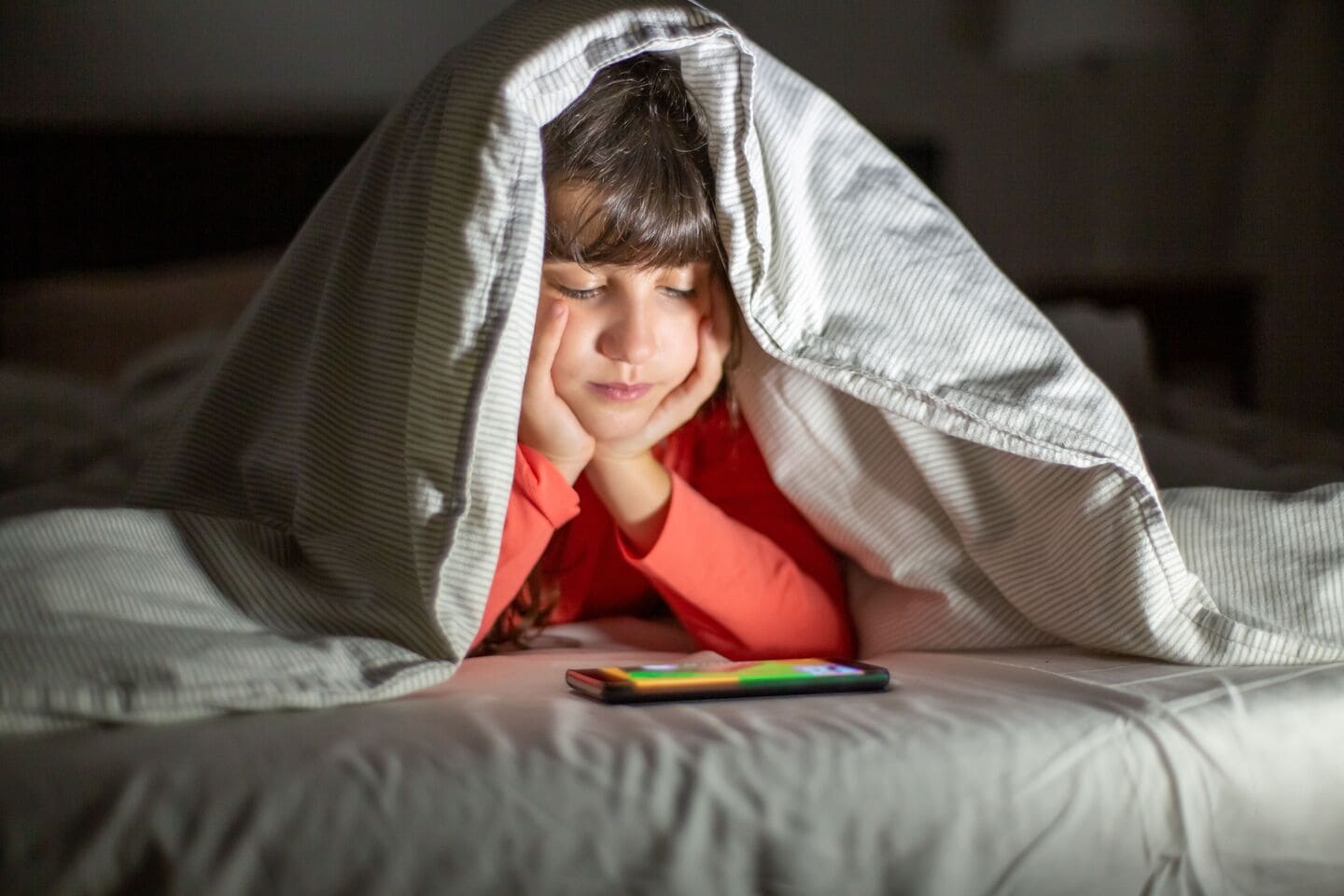
A night light is not a failure. If a small warm glow helps your child check the room and settle, use it. Children's Hospital Colorado notes that a dim night light can be acceptable; the balance is that the room should still be dark enough for sleep.
Practically, that means placing the light low and away from the bed, choosing a warm or amber tone, and avoiding blinking displays. A dark hallway, a closet door, and a covered screen can all change how the room feels. Some children want the door cracked; others want it closed. Let that choice be part of the routine rather than a nightly debate.
Make the room familiar before dark: same animal, blanket, water cup, night-light spot, and doorway check. Familiarity is evidence.
If they need you in the room
Some children settle only after a parent sits nearby. That does not mean you must stay until morning, nor does it mean you should leave suddenly. A broad approach is to offer calm presence, then gradually reduce the amount of help as your child practices being in the room — for example, sitting by the bed, then moving to the doorway, then checking back briefly.
The details should fit your child's age and temperament. If you want a structured parent-presence plan, ask your pediatrician or use clinician-reviewed guidance. Whatever you choose, consistency is usually more soothing than changing rules nightly.
Calm audio: what it can and can't do
Calm audio can give the room a human-sounding presence without requiring a child to watch anything. A steady voice, gentle pacing, and a predictable story can help attention settle instead of scanning every shadow. It can also help a parent step out of the room without an abrupt silence.
But audio is a companion, not a cure. It should not drown out a child's feelings, replace comfort, or push through fear that needs professional attention. Choose slow content, avoid exciting adventures, and stop if the story keeps your child awake. For many families, the best version is one calm voice, low volume, and no screen after the first tap.
If scary dreams keep returning, calm audio alone is not enough. That is when a separate daytime method can help.
Fear of the dark vs. recurring nightmares
Fear of the dark is usually about the present room: the lights are off, the child is awake, and the imagination fills the quiet. A recurring nightmare is about a dream that has already happened and may return after waking. The supports overlap — comfort, routine, and reassurance — but the main work happens at different times.
For bedtime worry, focus on daylight practice, a predictable room, and a calm wind-down. For repeated scary dreams, imagery rehearsal gives the child a chance to describe the dream while feeling safe and rehearse a playful new ending. If both are happening, start with the simplest routine and use the imagery rehearsal guide as a separate tool.
How StoryRadio fits in
The plan above works without an app: a parent's voice, a book, a night light, and the same calm order can be enough.
If your family wants optional support, StoryRadio plays calm, audio-only stories for ages 1–8. After a parent taps, stories can continue while the phone stays face-down or out of reach. It is a bedtime companion — not a substitute for comfort or professional care.
StoryRadio has no ads. Its free tier has published daily minimums, and an optional membership is planned for later to add more capacity and library content without removing the free floor. See the free & kids-safe guide. Use it only if it fits your child's routine.
Related guides
Frequently asked questions
Is it normal for kids to be afraid of the dark?
Yes. Fear of the dark is a common stage for young children. Delaying bedtime, wanting a parent nearby, calling out after lights-off, or waking for reassurance can all be ordinary responses to an active imagination and a dark, quiet room.
What helps tonight?
Keep the same calm sequence as last night: dim the lights, use a short reassuring phrase, offer a dim warm night light if it helps, start quiet audio, and put the phone face-down or out of reach. Predictability and low stimulation help the room feel safe.
What should we do during the day?
Talk about the fear when your child is calm, not at lights-out. Listen first, name the feeling, and use imagination constructively — for example, making a dark corner into a cozy den. Avoid long monster investigations at 2 a.m.
How can screens make bedtime anxiety worse?
Screens add light and often fast-moving content at the moment a child is trying to settle. They can also create another negotiation — one more video, one more show. Dim light, quiet audio, and the same predictable order usually support wind-down better.
When does calm audio help, and when should we get professional support?
Calm audio can be a companion to relaxation by giving a child something steady to listen to with eyes closed. It is not treatment. Ask a pediatrician or child mental health professional if fear causes extreme panic, sleep loss that persists, daytime impairment, or sudden behavior changes.
How is this different from nightmare imagery rehearsal?
Fear of the dark is usually worry about the room and what cannot be seen. A recurring nightmare involves a frightening dream that can be worked with during the day using imagery rehearsal. A child can have both, so the supports can complement each other.