Bedtime Stories That Grow With Your Child: Ages 1–8
Bedtime stories work best when they match a child's age. Around age 1, keep it brief and lullaby-like with familiar sounds and the child's own name. Around age 2, keep it short and repetitive (about 3–5 minutes / 150–200 words) with everyday themes and a gentle goodnight ending. By 3–4, add simple imagination, feelings, and friends while staying calm. By 5–6, allow clearer plots, curiosity about how the world works, and slightly longer storylines (up to about 15–20 minutes / 350–400 words). Pair the story with the same low-stimulation bedtime routine every night, prefer screen-free audio so your child can close their eyes, and treat "one more chapter" as optional — a calm ending beats a long one.
Why age-appropriate bedtime stories matter
A bedtime story that is too long fights a tired brain. A story that is too abstract loses a young one. Matching the story to your child's age is not about picking a "smarter" book — it is about matching the story's length, language, and emotional tone to how their attention and understanding actually work at that stage.
Three things make age-appropriate stories work. First, predictability: a child who knows roughly what is coming relaxes into the ritual. Second, sleep association: the same calm, low-stimulation pattern each night teaches the brain that this sound means it is time to wind down. Third, attention: a story that fits their attention span ends before they lose interest, so the ending feels satisfying rather than exhausting.
You do not need a bigger book collection. You need a better match between the story and the child in front of you tonight.
Quick reference: bedtime stories by age (1–8)
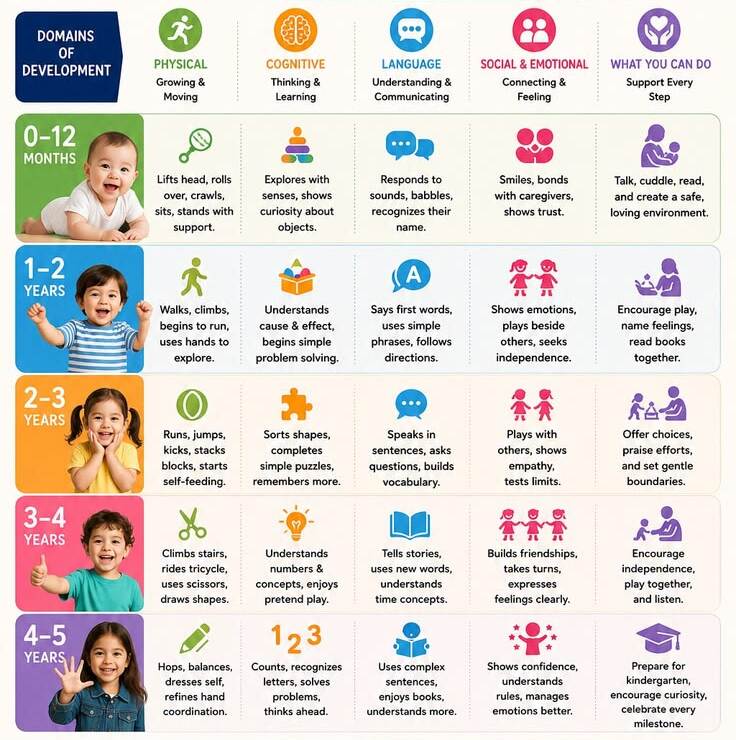
| Age | Attention Span | Story Length | Best Type |
|---|---|---|---|
| 1 | 1–3 min | 50–100 words | Lullaby-like, repetition of name, familiar sounds |
| 2 | 3–5 min | 150–200 words | Repetition, everyday themes, gentle goodnight |
| 3 | 5–8 min | 200–300 words | Toys come alive, naming feelings, warm ending |
| 4 | 8–12 min | 250–350 words | Friends, sharing, multi-character but calm |
| 5 | 10–15 min | 300–400 words | STEM, clear beginning-middle-end, light facts |
| 6 | 15–20 min | 350–400 words | School / change, confidence, open questions |
| 7 | 20–30 min | 400–500 words | Logical plots, problem-solving, fairness |
| 8 | 25–40 min | 500–600 words | Layered plots, humor, ethical questions |
Note: attention-span ranges above are practical, approximate StoryRadio guidance — not a scientific benchmark. Every child is different; use them as a starting point, not a rule.
Age 1 — First Words, First Wonder
Around age 1, first words emerge — a few by the first birthday, growing quickly through the year. One-year-olds respond to their own name, point, wave, and learn through senses and movement. They need comfort, warmth, and familiar voices.
Tonight: keep it brief and lullaby-like (50–100 words). Repeat your child's name, use familiar sounds, and keep a gentle rhythm. The goal is warmth and calm, not plot.
Age 2 — Language Explosion
At two, vocabulary is exploding — from roughly 50 to 300 words. Two-year-olds love repetition, need predictability and safety, and can hold attention for about 3–5 minutes.
Tonight: choose a short story (150–200 words) built around everyday routines — bath time, bedtime, familiar objects — with a gentle goodnight ending. "Read it again" is a feature, not a bug: repetition is exactly what builds language and comfort. Keep the same story for several nights if they ask.
Age 3 — Imagination Takes Flight
Three-year-olds blend fantasy and reality, believe toys can talk, and ask "why?" constantly. Emotions run strong, and attention stretches to about 5–8 minutes.
Tonight: bring a favorite toy to life in a short magical adventure (200–300 words). Name feelings along the way — "Bear feels nervous, then brave" — and end warm and safe. Keep the imaginary world cozy, not thrilling; the goal is wonder, not excitement.
A three-year-old kept asking about the moon at bedtime. That night's story turned the moon into a shy friend who only comes out when the house is quiet. By the last page, she whispered "goodnight, Moon" — and settled without a fuss. A tiny story, a calmer night.
Age 4 — Social Awakening
Four-year-olds begin to understand other people's feelings and become fascinated by friendship. Attention grows to about 8–12 minutes.
Tonight: try a multi-character story (250–350 words) where friends cooperate, share, and solve a small problem together. Keep the cast small and the tone calm — two or three friends are enough. Stories about kindness and courage land especially well here.
Age 5 — Cognitive Leap
Five-year-olds have 2,000+ words, emerging logic, and a growing obsession with how the world works — space, nature, machines. Attention is about 10–15 minutes.
Tonight: choose a story (300–400 words) with a clear beginning, middle, and end, and weave in a few light facts — why the moon changes shape, how a seed becomes a tree. Curiosity, not a quiz: the facts should support the story, not interrupt it.
Age 6 — Stepping into Independence
Six-year-olds deepen their moral reasoning and empathy, and many are navigating the school transition — new environments, new rules, new separations. Attention reaches about 15–20 minutes.
Tonight: try a richer story (350–400 words) about new beginnings, coping with change, or building inner confidence. End with an optional open question — "What would you do if you were the fox?" — to turn the story into a quiet parent-child conversation.
Age 7 — Making Sense of the World
Seven-year-olds are developing concrete logical thinking. They read simple words, understand cause-and-effect, and have a strong sense of fairness and rules. They compare themselves to peers.
Tonight: try a longer story (400–500 words) with a clear plot, logical problem-solving, and a fair resolution. Stories about making things right and standing up for what is fair land especially well.
Age 8 — Confident Storyteller
Eight-year-olds have a large vocabulary, enjoy humor and wordplay, and can follow complex narratives. Many read chapter books independently and have a stronger sense of right and wrong.
Tonight: choose a richer story (500–600 words) with layered plots, humor, and gentle ethical questions. They can handle more characters and a twist — but keep the ending calm enough for sleep.
How to choose tonight (3 checkpoints)
Run these three quick checks before you pick:
- Can they sit through it without squirming? Match the length to their attention span in the table above.
- Is it calming or exciting? At bedtime, choose calm. Save the high-energy adventure for daytime.
- Is it the same order as last night? A predictable sequence matters more than a new story. When in doubt, repeat the same gentle order.
Screen-free audio bedtime
A story read aloud or played as audio helps a child close their eyes and listen, instead of watching a screen. Bright screens and fast-moving video stimulate the brain at the exact moment you want it to slow down.
If you use audio: put the phone down out of reach, use continuous playback so stories flow one into the next, and avoid the "one more video" negotiation. A calm voice telling a story is a different experience from a screen — and for sleep, that difference matters.
How StoryRadio grows with your child
The table and ideas on this page work with any book or audio — no app required.
If you want a hands-free option, StoryRadio is a free, audio-only bedtime story app. You set your child's age and interests once, and it generates age-appropriate stories — short and repetitive for toddlers, richer and more social for older kids — narrated in a calm voice with continuous playback like a vintage radio. No ads, no subscriptions, and zero screen time after the first tap.
Use it only if it fits your routine. A good bedtime story is the one that helps your child wind down, whatever the source.