Continuous Bedtime Radio for Kids: Tap Once, Phone Down
A bedtime radio for kids is continuous, calm audio storytelling that plays one story after another — like leaving the radio on — so you tap once, put the phone face-down, and your child closes their eyes and listens. Continuous playback removes bedtime negotiation and screen light at exactly the moment you want the brain to wind down. Pair it with a predictable routine and age-appropriate story lengths, and save nightmare work for daytime techniques like imagery rehearsal.
The 9 p.m. problem
By the end of the day, the last thing a tired parent wants is to scroll a playlist, argue about "one more video," or tap play again every few minutes. The problem is rarely the story itself — it is the friction around it. A bright screen, a gap between tracks, a "what do we play next?" decision: each one nudges a settling child back awake.
A single five-minute story ends, the room goes quiet, and a child who was nearly asleep is suddenly wide awake again — while you are already out of the room or halfway to the kitchen. Multiply that by two or three times a night and bedtime stops being a routine and becomes a negotiation.
What "bedtime radio" means
Think of it as a radio station, not a single track. A playlist is a fixed set you choose in advance. A podcast is one long episode. An interactive storybook app asks your child to tap and swipe. A video demands eyes on a screen. A bedtime radio just keeps playing calm stories, one after another, without needing you or your child to make a choice.
Here is the practical difference between a single story and continuous playback. With a single track, playback stops the moment the story ends — someone has to tap play again, and the silence in between is often the exact moment a child stirs. With continuous playback, the next story starts on its own before the silence registers. There is no "is it over?" moment, no decision to make, and no reason to creep back into the room.
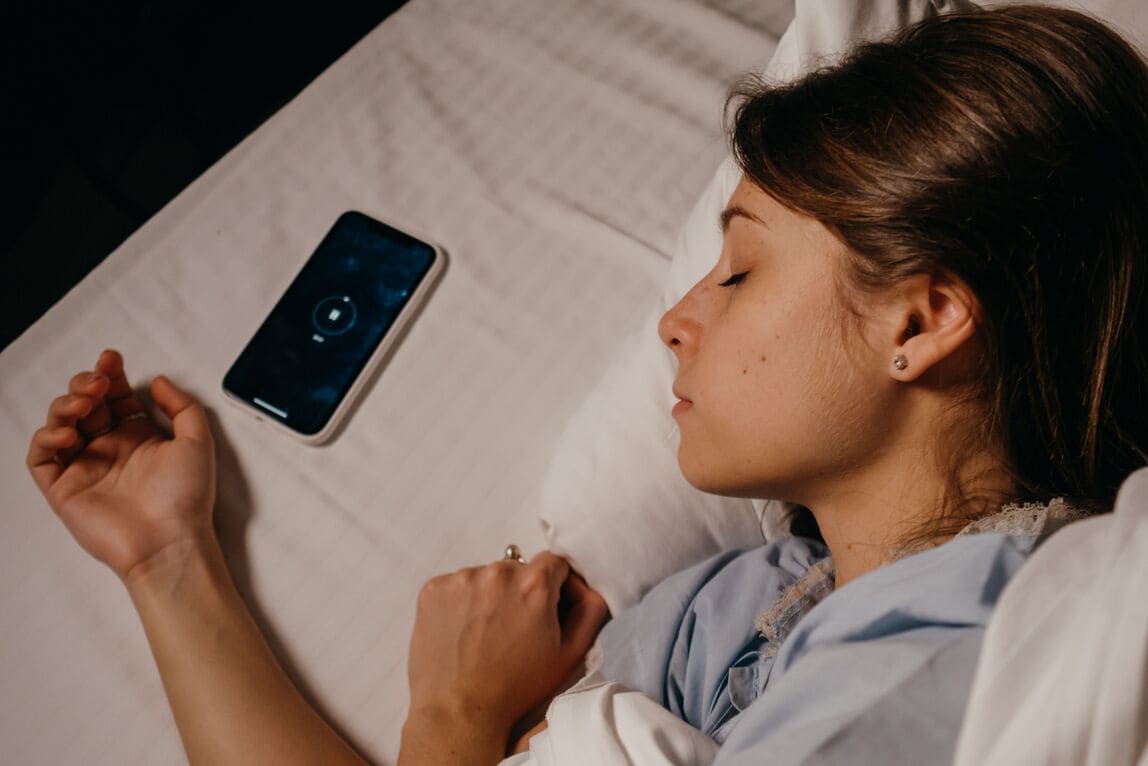
Why continuous playback helps the sleep routine
Three things happen when stories keep flowing. First, predictability: the next story always comes, so there is no "what now?" moment. Second, fewer decisions: tired brains are bad at choices, and removing the choice removes the negotiation. Third, less visual stimulation: with the screen off and eyes closed, the body settles instead of staying alert.
There is a fourth: no silence. The gap between one story ending and the next beginning is a small but real wake-up trigger. Continuous playback closes that gap, so a child drifting toward sleep has nothing to notice.
Removing the screen is its own step — for more on keeping the room dark and eyes closed, see our guide to screen-free bedtime stories.
A four-year-old drifted off during one story, only to snap awake the moment it ended and the room fell quiet. Her parent had to tiptoe back in, tap play again, and hope she stayed under. Switching to continuous playback changed the night: when the first story ended, the next was already playing. There was no silence to wake into — and no parent creeping back through the door.
How to do a hands-free bedtime (5 steps)
Run the same calm sequence every night:
- Bath, pajamas, then dim the lights.
- Start the continuous audio.
- Set a sleep timer so it stops on its own once your child is asleep (if you want it to).
- Put the phone face-down, out of reach.
- If they wake, comfort briefly — don't restart a video.
The exact stories matter less than the sequence. A child who knows it is bath, pajamas, lights down, then stories is already settling before the first word is spoken — the routine does half the work.
The first week
Switching from a playlist or video to continuous audio takes a few nights. Expect resistance first: a child who is used to choosing will ask, "Can I pick?" or "Can I see it?" The answer is the same calm line every night — "Tonight we listen" — and then you start the audio and leave the room.
By night three or four, the novelty of pushing back fades, and the routine starts doing the work. The child knows what comes next without being told. By the end of the week, most children stop asking, because the continuous voice has become the familiar thing.
The tell that it is working is not silence — it is that you stop being called back into the room. When the audio carries on its own, the "one more" negotiation loses its lever, and the door you closed stays closed.
The goal is not a silent, perfect transition. It is a repeatable sequence you can run on the nights you are exhausted. If one night falls apart, run the same order again tomorrow — consistency over several nights matters more than any single bedtime going perfectly.
Continuous radio vs playlists, podcasts, and "story then noise"
| Format | What it is | Best for |
|---|---|---|
| Playlist | A fixed set you pick in advance | When you want control over each story |
| Podcast | One long episode | Focused, single-topic listening |
| Story then noise | A story followed by white noise | Very young children needing steady sound |
| Bedtime radio | Continuous stories, no choice needed | Hands-free, screen-free wind-down |
A fixed Storyberries-style compilation is fine when you want to hand-pick a set and your child settles quickly. Continuous, age-matched radio wins when the point is to remove the choice entirely — so there is no gap, no "what next?", and no need for you back in the room.
Story-then-noise vs. continuous radio: which fits tonight?
Story-then-noise uses a short story as a bridge into steady white or pink noise. It can mask a dog, sibling, or street sounds — often useful for young children or busy homes.
Continuous radio solves the end-of-story pause. Instead of silence prompting "Now what?", the next calm story begins. Neither is universally better; both should be audio-only, with the phone face-down or out of reach.
Spotify-style sleep playlists and podcasts
Streaming playlists and podcasts are familiar and convenient, especially if your child loves a particular narrator or you want the exact same tracks. But a fixed set may need more taps, eventually stops, and features or interruptions can depend on the service and plan — check the app you use.
A radio model fills that gap: after the first tap, the next calm story arrives without a "what next?" decision.
Sleep timer or all-night audio?
There is no single rule. Many families use a timer after their child drifts off; others find a longer run helps with night waking. Try a timer first, watch a few nights, and adjust. Keep playback low and don't place a speaker near your child's ears. StoryRadio's timer is optional.
Three questions to choose
- Does silence at the end of a story wake them? Lean toward continuous stories.
- Is the main problem household noise or a need for steady, non-narrative sound? Lean toward white or pink noise, or story-then-noise.
- Is the fight really about a glowing video? Either audio path is a calmer choice — YouTube is not.
Match story length to your child's age
A one-year-old does best with soothing, ultra-short audio; an eight-year-old can follow a longer plot. Matching the story length and theme to their age keeps the flow calm. See our full breakdown in bedtime stories by age.
Getting the length right matters for the same reason: a story that runs too long outlasts a tired child's attention, while one that ends too soon invites the "one more" negotiation. The right length is the one that ends just before their eyes drift fully shut.
When nights feel scary
Continuous calm audio can help a child settle, but it is not a treatment for nightmares or anxiety. For recurring scary dreams, imagery rehearsal — rewriting the dream during the daytime — is the technique to reach for. See how to help kids with bedtime nightmares.
If the issue is the dark room or separation at lights-out rather than a repeating dream, see our plan for bedtime anxiety and fear of the dark.
What continuous audio does well is keep the room calm and predictable. What it does not do is treat the fear itself — that still belongs to a daytime, evidence-based technique.
How StoryRadio works as a bedtime radio
The routine above works with any calm audio — no app required.
If you want a hands-free option, StoryRadio is a free, audio-only bedtime story app for ages 1–8. Tap once and it plays continuous stories matched to your child's age and interests — narrated in a calm voice, like a vintage radio. You can set a sleep timer, and there are no ads, ever, and zero screen time after the first tap.
Because the stories keep flowing on their own, there is no quiet gap to fill and no "just one more" pause — the sequence simply carries on, gently, until the sleep timer ends it.
The free tier is always available with published daily minimums; an optional membership, planned for later, may add higher limits and a richer library — without removing the free floor. See our free & kids-safe guide.
Still choosing between a phone radio and a dedicated player? See phone radio vs Yoto/Tonie →
Use it only if it fits your routine. A calm, predictable bedtime works with or without an app.
Frequently asked questions
What's the difference between continuous stories and story-then-noise?
Story-then-noise uses a short story as a bridge into steady white or pink noise. Continuous radio starts the next calm story before silence arrives. Either can help; the better fit depends on whether silence, external noise, or the next choice is what wakes your child.
When is white or pink noise the better tool?
Steady noise is often useful when household sounds wake a child or when a young child mainly needs a consistent sound after a story. Keep playback low, avoid placing a speaker near the ears, and use the simplest sound that helps your child settle.
When does continuous storytelling win?
Continuous storytelling is useful when silence at the end of a story re-engages a toddler or preschooler, or when the next 'what now?' choice wakes them enough to need a parent. The next calm story arrives without another tap.
How do Spotify-style sleep playlists fit in?
Familiar streaming playlists and podcasts can be convenient, especially when you want to choose the exact tracks. A fixed set still has an ending, may need more taps, and features or interruptions can depend on the service and plan. Check the current app and your account; continuous radio reduces the 'what next?' decision.
Should audio play all night or use a sleep timer?
There is no single rule. Many families let sound stop after their child is asleep; others find a longer run helps with night waking. Try a timer first, watch a few nights, and keep volume low rather than placing a speaker near your child's ears.
How does a phone stay screen-free as a radio either way?
Choose audio, turn the screen off or face the phone down, put it out of reach, and avoid autoplay video. Whether the next sound is a story or steady noise, the phone should not become something to watch.